Happy All Hallow New Year
My rambling epistle of this year is as much directed at me as it is to share with you. It is about the accountability of writing; what we owe to ourselves and others as individuals who are vocationally mandated to communicate to our community and, our own individual ethical obligation to use our voices when so many do not have one to be heard.
To think, one needs to read; in order to know what one is thinking, one needs to write. There are no short cuts to this human condition in the modern age. As Joan Didion said; “I write entirely to find out what I’m thinking, what I’m looking at, what I see and what it means. I don’t know what I think until I write it down.”
And there is much to think about.
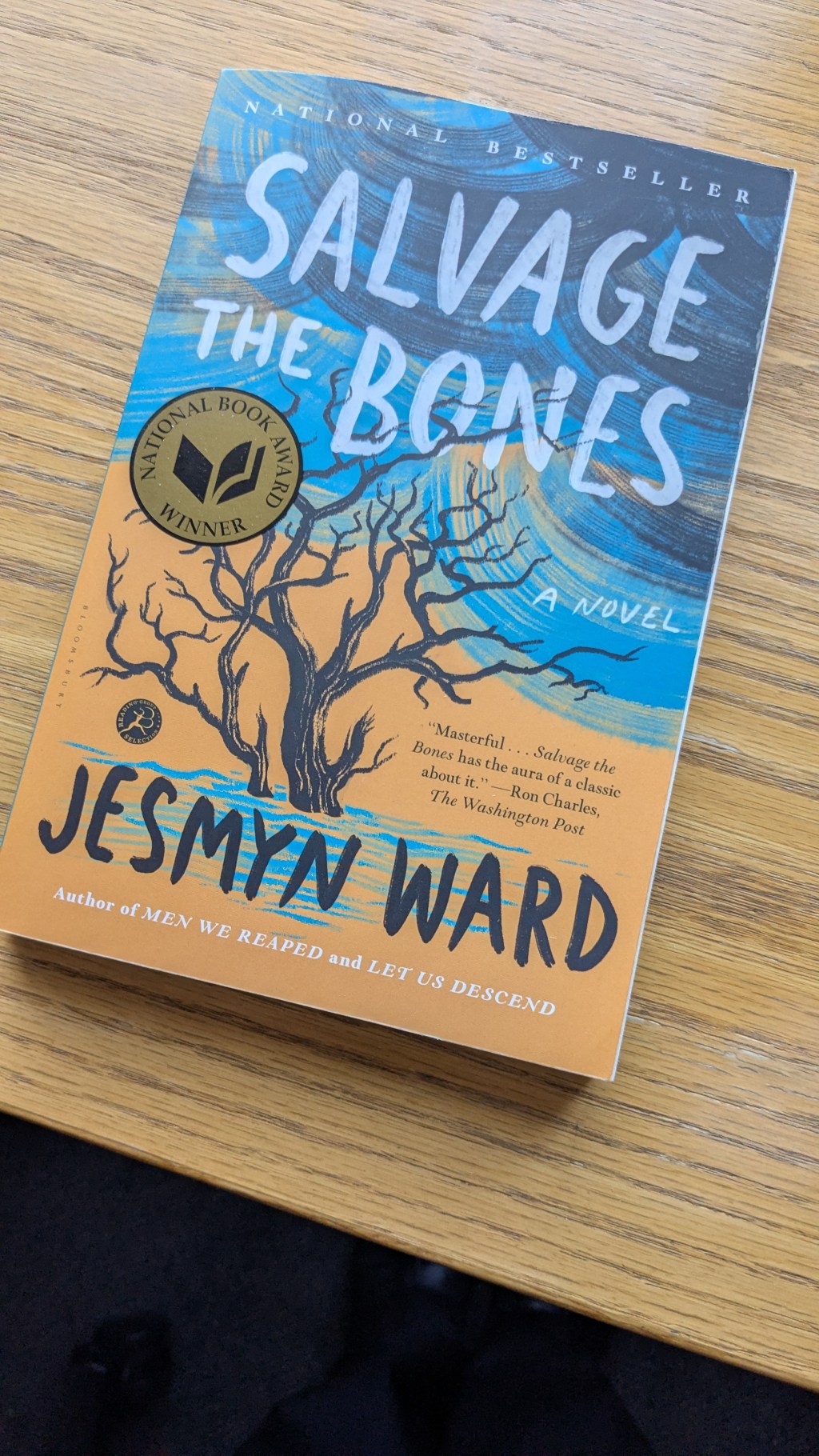
Each of you will find a copy of Salvage the Bones by Jesmyn Ward on your desk. I consider the work the great Katrina novel: a work capturing the transcendent meaning of Katrina in ways that much of the documentary and other forms that covered the storm, and its aftermath do not or cannot.
John Berger (someone else you should take time to familiarize yourself with) in one of his essays positioned Katrina as the moment when the mask of opacity of American racism and segregation was ripped off for all to see the reality of the American nation as it really is.
We are still living in the age of Katrina. The weather may have changed, but the storm is still raging. To understand America in its present moment one of the lenses to view through is that of Katrina, therefore the continued relevance of Ward’s novel.
Fiction illuminates pathways to understanding that other prose does not. There are truths and realities to be gleamed by what Ward has created enriching our understanding in ways other forms of composition do not. There are reasons why you should read fiction. Ward’s work is one of them.
But the matter at hand isn’t fiction prose vs essay writing. It is about writing itself, and the accountability of writing. We who have a voice and ability to make that voice heard have an accountability to ourselves and to our community, however defined, to use that voice. Writing thus becomes an obligation. Each of us has different avenues to fulfill that obligation, but we all share the same accountability.
Practicing a craft, building our community, being a witness.
We talk a great deal about privilege. Being literate and possessing the ability to write and advocate is a privilege. You have an obligation to share it with others and to leverage on behalf of others who don’t share your privilege. The canvasses and spaces for this vary from your personal journals to social media posts to other richer prose compositions and platforms.
Choose what you will but write.
Ward’s novel is offered to engage you as a writer, a citizen and as a human being. To read the narrative, appreciate the skill of a great writer and to remind yourself why sharing stories remains one of the most human acts of all.
Writing is a paradox of solitude and solidarity. The age of Katrina demands that we all practice that duality in our collective shared interest.
Wishing you a joyous Halloween
 thelettrist